CS.06
CREATIVE DIRECTION
Tellurium

Reading the Ruler is a research presentation built for the Caltech WSP STEM Bootcamp, in the Hutzler Lab under Dr. Ready — tellurium vapor as a frequency reference for precision atomic physics. It’s included here not for the physics, but for the process behind it.
This deck doesn’t use the OB1x palette. That’s the point.
The color, type, and pacing were built for the experiment being presented, not for consistency with the rest of this site. A void stage, because the work happens in the dark, on an optics bench. Caltech’s own identity orange, because the institution is part of the story. One blue, tuned to 483 nm, the actual working wavelength. One green, spent exactly once, because radium — the reference transition this project builds on — appears exactly once.
None of it was accepted from a default. All of it was directed.
Same discipline, different register
Every other case study here demonstrates Collaboration Architecture through a system: a research study, a product, a piece of industrial design. This one demonstrates it through the making of a design artifact itself. Steering an AI tool toward a specific, considered visual outcome — instead of the aesthetic it defaults to — is the same discipline of staying an agent, not a spectator, applied one level up: to the design process, not just the system being designed.
What it’s built on
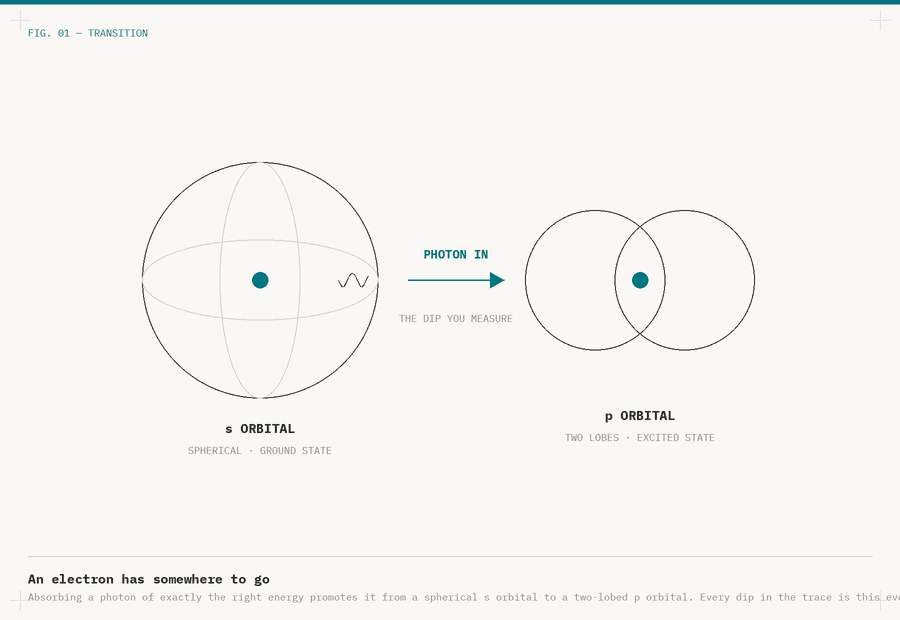
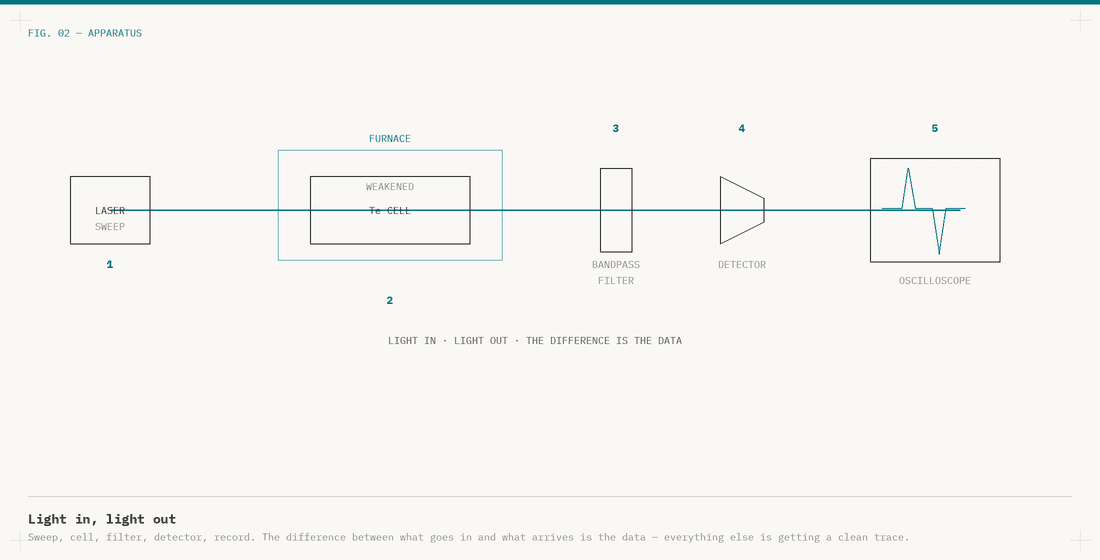
Every atomic transition has a frequency. Te2 has hundreds of them, catalogued since 1980, sharp and fixed. Sweep a laser through hot tellurium vapor, watch where the light disappears, and every dip inherits a known frequency from the atlas. A wiggle on a screen becomes a number. That’s the whole idea — nature already marked the ruler; the apparatus just has to read it.
Process note
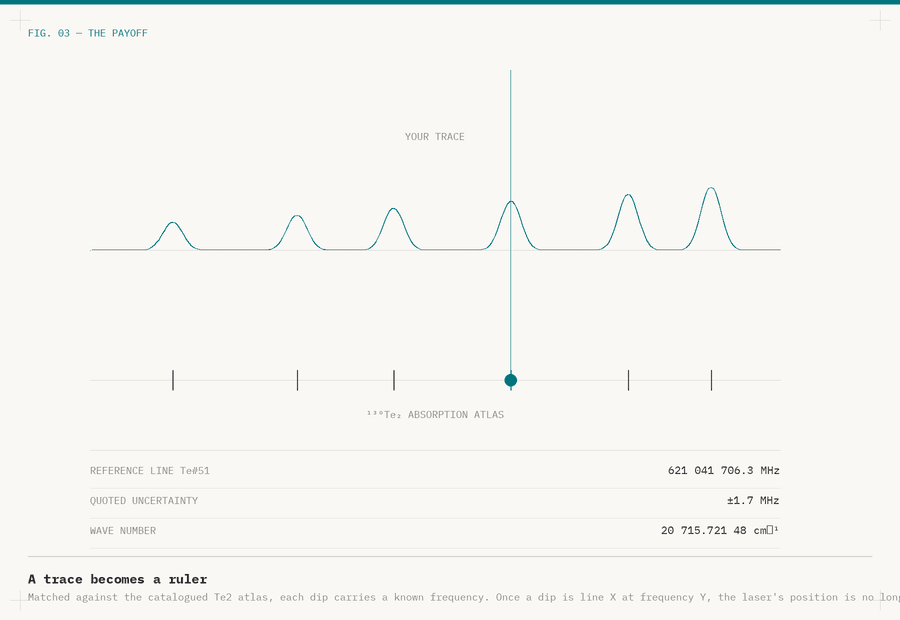
Alignment, thermal stability, and noise took more of the week than the concept did. The schematic has no misaligned beam and no drifting furnace — getting a clean trace was the actual work. That gap, between the diagram and the apparatus, is worth stating plainly: the practice half of this project is where a new researcher has something real to say.
Narrated walkthrough — coming soon. (A full narration of this presentation, using the deck’s own speaker notes, is in production for the OB1x YouTube channel. This section updates with the link once it’s live.)